Running a restaurant in Tacoma means managing more than great food and customer service. Food service establishments must also comply with local Fats, Oils, and Grease (FOG) regulations designed to protect the city’s wastewater system. Failing to maintain your grease interceptor can lead to plumbing backups, expensive repairs, permit issues, and violations that disrupt your business.
Whether you own a restaurant, café, bakery, food truck commissary, or commercial kitchen, understanding Tacoma’s grease interceptor requirements and following a preventative maintenance schedule is one of the easiest ways to stay compliant.
At Upfront Septic, we help restaurants throughout Tacoma and Pierce County keep their grease interceptors operating efficiently with professional pumping, inspections, and recurring maintenance programs.
Understanding Tacoma’s FOG Compliance Requirements
The City of Tacoma’s Fats, Oils, and Grease (FOG) Program is designed to prevent grease from entering the public sewer system, where it can solidify and create costly blockages and sanitary sewer overflows.
From 2018-2023, Tacoma tracked 98 total sewer blockages, attributing 16 to FOG; of those, five cited nearby foodservice as a suspected source, according to The News Tribune.
Food service establishments that generate grease are required to install, operate, and maintain an approved grease removal device that complies with Tacoma’s Grease Interceptor Sizing & Installation Policy, updated in 2024. These devices capture fats, oils, and grease before wastewater enters the municipal sewer system, helping protect both your plumbing and the City’s infrastructure.
Businesses commonly affected by Tacoma’s FOG requirements include:
- Restaurants
- Coffee shops
- Cafés
- Bakeries
- Catering companies
- Hotel kitchens
- School cafeterias
- Hospitals
- Grocery stores with food preparation
- Commissary kitchens
- Food manufacturers
Even businesses that produce relatively small amounts of grease may still be required to install an approved grease interceptor depending on their kitchen operations.
Why FOG Compliance Has Become a Major Issue for Tacoma Restaurants
Grease interceptor compliance has become one of the most discussed challenges facing Tacoma’s restaurant industry over the past few years.
Several local restaurant owners have publicly shared that unexpected grease interceptor requirements delayed openings, increased construction costs, and complicated renovations after they had already signed leases. In response to these concerns, the Tacoma City Council approved an ordinance in early 2025 requiring commercial property owners and brokers to provide prospective food service tenants with information about Tacoma’s FOG requirements before they purchase or lease a space. The goal is to help restaurant owners understand potential grease interceptor requirements before committing to a property.
The issue isn’t that grease interceptors aren’t necessary. They play an essential role in protecting Tacoma’s sewer infrastructure from fats, oils, and grease that can solidify inside sewer pipes and contribute to costly blockages. Rather, many restaurant owners have expressed frustration about learning of expensive interceptor requirements late in the permitting process, after significant investments have already been made. Some have even had to close their doors due to these unexpected regulation changes.
For example, the owners of Rolls House Korean restaurant in Hilltop were forced to close their doors after they were unable to make the necessary upgrades to their grease trap system. Others have faced major delays and budget issues because of these new regulations.
The conversation has also highlighted the importance of evaluating FOG compliance early in the planning process. Before signing a lease, restaurant owners should determine:
- Whether an existing grease interceptor meets current requirements.
- Whether the interceptor is properly sized for the intended kitchen.
- Whether additional plumbing modifications may be required.
- What ongoing pumping and maintenance schedule will be needed after opening.
Addressing these questions early can help avoid unexpected costs and project delays while keeping your restaurant on track for opening day.
Choosing the Right Grease Interceptor
Compliance starts long before your first grease pumping service.
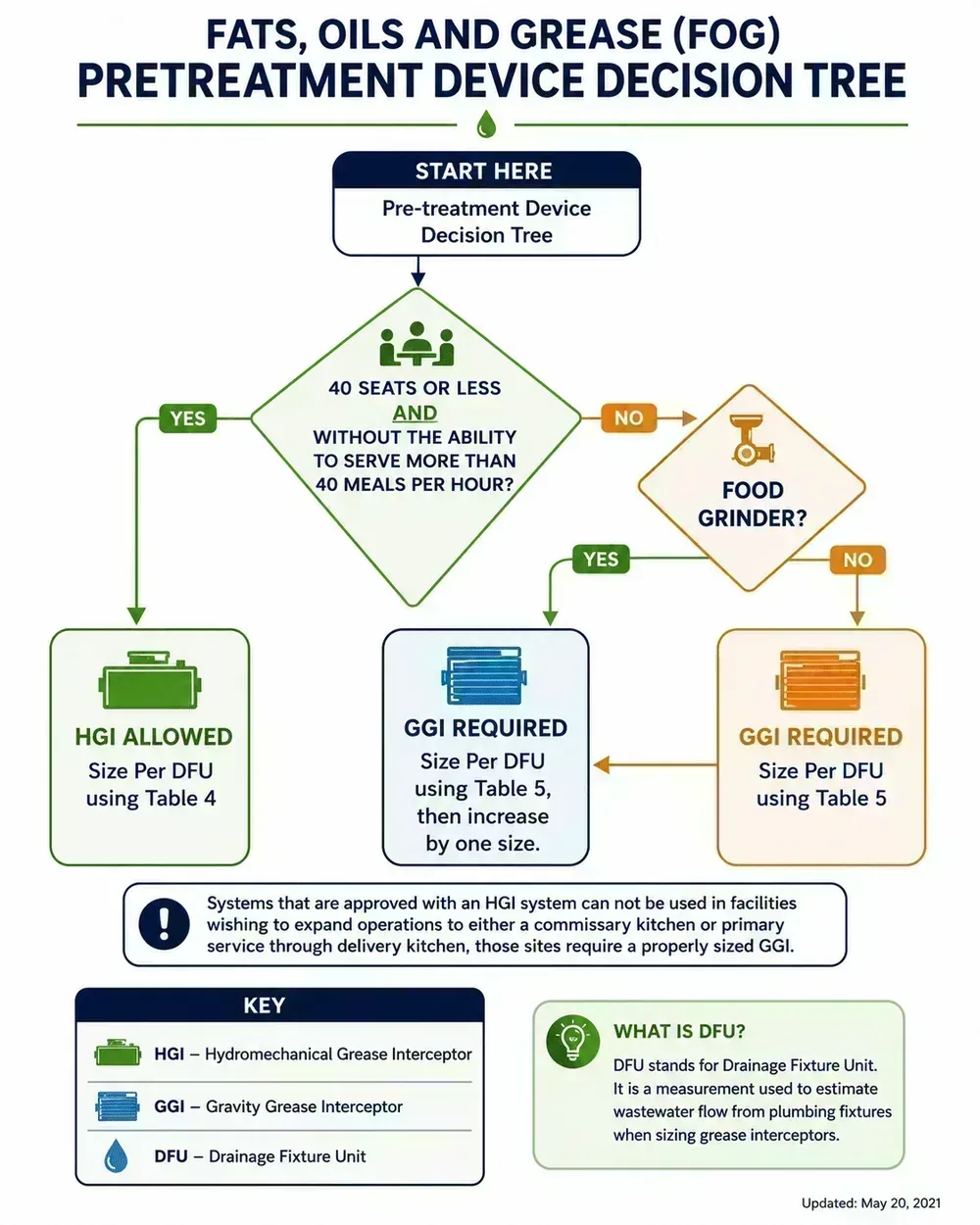
When a new restaurant is built or an existing kitchen is remodeled, Tacoma reviews the proposed grease interceptor during the permitting process. The interceptor must be properly sized based on factors such as anticipated wastewater flow, kitchen fixtures, and the number of meals served during the busiest hour of operation.
The City of Tacoma’s FOG policy generally recognizes two types of grease removal devices.
Hydromechanical Grease Interceptors (HGIs)
Hydromechanical grease interceptors are commonly used in smaller food service establishments serving approximately 40 meals or fewer during peak operating hours. These units may be installed indoors or outdoors and use an approved flow control device to slow incoming wastewater, allowing grease to separate before entering the sewer system.
Gravity Grease Interceptors (GGIs)
Larger restaurants typically require underground gravity grease interceptors. These systems begin at a minimum capacity of 500 gallons and are designed to accommodate higher wastewater volumes generated by busy commercial kitchens. Most grease-producing kitchen fixtures are routed through the gravity interceptor before wastewater leaves the building.
Selecting the proper interceptor size during construction helps avoid compliance issues, excessive maintenance, and costly equipment upgrades later.
Tacoma’s 25% Rule for Grease Interceptors
Tacoma’s Grease Interceptor Sizing & Installation Policy recommends cleaning grease interceptors whenever grease and solids occupy approximately 25% of any collection chamber.
Waiting until the interceptor is completely full significantly reduces its effectiveness and increases the likelihood that grease will escape into the sewer system.
How often your interceptor reaches the 25% threshold depends on several factors, including:
- Number of meals served
- Type of food prepared
- Fryer usage
- Kitchen size
- Grease interceptor capacity
- Employee kitchen practices
Some restaurants may require monthly service, while others may only need quarterly maintenance. A professional inspection can help determine the right schedule based on your kitchen’s actual grease production.
Keep Accurate Maintenance Records
Regular pumping is only part of maintaining compliance.
Restaurant owners should keep detailed service records documenting grease interceptor maintenance. These records help demonstrate that the system is being maintained properly and can simplify inspections or permit reviews.
Professional grease pumping companies typically provide documentation that includes:
- Date of service
- Amount of waste removed
- Maintenance performed
- Condition of the interceptor
Keeping organized maintenance records also makes it easier to identify when pumping frequency should be adjusted based on actual grease accumulation.
Additional Best Practices for FOG Compliance
Routine pumping works best when combined with good kitchen practices.
Restaurant owners should train employees to:
- Scrape food waste into the trash before washing dishes.
- Wipe grease from cookware before rinsing.
- Never pour cooking oil down sinks or floor drains.
- Recycle used cooking oil whenever possible.
- Use sink strainers to capture food particles.
- Report slow drains before they become larger plumbing issues.
Reducing the amount of grease entering the interceptor helps improve performance and may reduce the frequency of pumping.
Why Tacoma Restaurant Owners Should Plan for FOG Compliance Early
In recent years, grease interceptor requirements have become a significant topic within Tacoma’s restaurant community. Several restaurant owners have shared publicly that unexpected grease interceptor requirements delayed openings, increased construction costs, or required changes to renovation plans after leases had already been signed. These experiences have highlighted how important it is to understand FOG compliance before opening or remodeling a food service establishment.
In response to these concerns, Tacoma adopted new disclosure requirements intended to give prospective restaurant owners more information about grease interceptor requirements before purchasing or leasing commercial property. The goal is to help businesses identify potential compliance obligations early, reducing unexpected expenses and permitting delays later in the project.
While the permitting process has received increased attention, one thing remains clear: properly maintained grease interceptors are essential for protecting Tacoma’s wastewater system. Grease, oils, and food solids can accumulate inside public sewer lines, contributing to blockages, backups, and sanitary sewer overflows if they are not properly captured and removed. Tacoma’s FOG program exists to reduce these risks while protecting both public infrastructure and private plumbing systems.
Compliance Doesn’t End After Installation
Many restaurant owners assume that once a grease interceptor has been installed and approved, the hard part is over. In reality, ongoing maintenance is one of the most important parts of remaining compliant.
Tacoma’s Grease Interceptor Sizing and Installation Guidelines specify that grease interceptors should be cleaned whenever fats, oils, grease, and solids occupy approximately 25% of any chamber’s capacity. Allowing grease to build beyond this point reduces the interceptor’s effectiveness and increases the likelihood that grease will enter the municipal sewer system.
Routine maintenance also helps restaurant owners avoid many of the issues that can interrupt business operations, including:
- Plumbing backups
- Slow draining sinks
- Unpleasant odors
- Emergency service calls
- Increased repair costs
- Potential compliance concerns during inspections
A preventative maintenance schedule is often the most cost-effective way to protect your investment while keeping your kitchen operating efficiently.
Regular Grease Pumping Is an Investment in Your Business
Whether you’re opening a new restaurant, taking over an existing commercial kitchen, or operating an established business, regular grease interceptor maintenance should be viewed as preventative asset management rather than simply another operating expense.
Professional pumping and inspections help restaurant owners:
- Maintain compliance with Tacoma’s FOG regulations.
- Keep grease interceptors operating at peak efficiency.
- Prevent costly plumbing emergencies.
- Extend the life of grease removal equipment.
- Maintain service documentation for inspections.
- Reduce the likelihood of unexpected downtime.
For many restaurants, establishing a recurring pumping schedule is one of the simplest ways to avoid the types of compliance issues that have affected other businesses throughout Tacoma. Instead of waiting until a grease interceptor reaches capacity or causes plumbing problems, routine maintenance keeps your system functioning properly year-round.
Partner with Upfront Septic to Stay Ahead of FOG Compliance
Understanding Tacoma’s FOG regulations is only the first step. Staying compliant requires ongoing maintenance, timely pumping, and experienced professionals who understand how commercial grease interceptors operate.
At Upfront Septic, we help restaurants throughout Tacoma and Pierce County develop customized grease interceptor maintenance schedules based on their kitchen’s actual usage. Our team provides professional grease trap and interceptor pumping, inspections, and service documentation to help keep your business operating smoothly while supporting your ongoing compliance efforts.
Whether you’re preparing to open a new restaurant or simply want to avoid unexpected plumbing issues, preventative grease interceptor maintenance is one of the smartest investments you can make in your business.
Tacoma FOG Regulations FAQ
What is Tacoma’s grease trap 25% rule?
The City of Tacoma’s Fat, Oil, and Grease regulations expect commercial restaurants and kitchens to have their grease traps and interceptors cleaned when they reach 25% capacity, rather than only when they’re full.
Why did Tacoma make its grease trap laws stricter?
The City of Tacoma cited at least 16 city sewer blockages caused by fat, oil, and grease between 2018 and 2023. The stricter regulations hope to reduce the number of sewer issues caused by commercial grease disposal.
How often should my restaurant’s grease trap be cleaned?
The regularity of your grease trap pumping depends on a few factors, such as the size of the interceptor and the number of meals served per hour. As a general rule of thumb, restaurants should plan to have their grease traps cleaned at least once per quarter. If you’re unsure about your restaurant’s grease trap cleaning schedule, our experts can inspect your system and help you devise a maintenance schedule that matches your restaurant’s unique circumstances.
What are the different types of grease traps?
The City of Tacoma recognizes Hydromechanical Grease Interceptors (HGI) and Gravity Grease Interceptors (GGI) as the two acceptable types of grease traps for commercial kitchens.
How can I make sure my restaurant is in compliance with Tacoma’s grease trap regulations?
Tacoma restaurant owners can make sure they meet the City’s regulations by having the correct size and type of grease interceptor for their establishment and having it pumped and cleaned regularly. Maintaining service records makes passing inspections easy.