When your kitchen sink fills instead of draining, it can feel like your entire day has come to a standstill. The good news is that many garbage disposal issues can be solved with a few simple techniques before you ever need professional help.
A clogged garbage disposal is one of the most common plumbing problems homeowners face. Standing water in the sink, unpleasant odors, and slow draining are all signs that something is preventing the disposal drain from working properly. Learning How to unclog a garbage disposal with standing water can save time, reduce frustration, and help you avoid unnecessary replacement costs.
In this guide, Upfront Septic shares nine proven DIY methods that actually work. You’ll also learn when it’s time to stop troubleshooting and call a professional service to protect your plumbing system.
How to Unclog a Garbage Disposal with Standing Water Safely Before You Start
Before attempting any repair, safety should always come first. A garbage disposal contains sharp grinding components, and even though they are not traditional blades, they can still cause serious injuries.
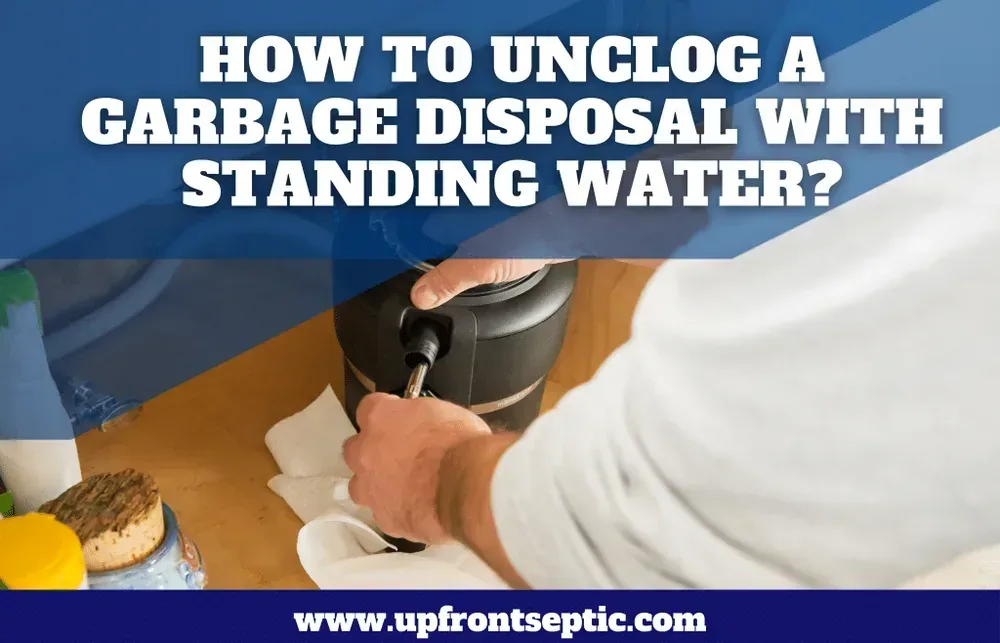
Start by turning off the power to the disposal. If your unit plugs into an outlet beneath the sink, unplug it. Otherwise, switch off the circuit breaker. Never place your hand inside a clogged garbage disposal.
If the sink is full, use a small container or pump to remove as much standing water as possible. This makes it easier to inspect the unit and prevents spills while working.
A flashlight can help you look inside for visible objects that may be stuck, but only use pliers or tongs to retrieve them. Never reach in with your fingers.
Upfront Septic recommends taking a few extra minutes for safety because careful preparation often prevents additional damage and unnecessary repair expenses.
Remove Visible Debris That Causes Garbage Disposal Clogs
Many disposal clogs happen because the wrong materials enter the unit. Fibrous vegetables, grease, coffee grounds, eggshells, and large food scraps can create stubborn blockages.
Carefully inspect the opening and remove anything visible. Sometimes the obstruction sits just beneath the splash guard and is easy to reach using long kitchen tongs.
Common items that create clogs include:
- Fibrous celery and corn husks
- Grease and hardened cooking oils
- Pasta and rice that expand with water
- Fruit pits and bones
- Large amounts of potato peels
- Utensils or other foreign objects accidentally dropped into the garbage disposal.
After clearing visible debris, run cold water for several minutes once power is restored to see whether the sink drain begins flowing normally.
Professionals at Upfront Septic frequently find that simple blockages are responsible for many household clogged disposals.
Use Baking Soda and Vinegar to Clean the Disposal Naturally
One of the safest home remedies uses baking soda and vinegar. This combination helps clean buildup, loosen minor blockages, and reduce unpleasant odors.
Pour about half a cup of baking soda into the disposal drain, followed by one cup of vinegar. The bubbling reaction helps break apart residue inside the garbage disposal.
Allow the mixture to sit for several minutes before flushing it with hot water.
This natural solution works especially well when grease or soap residue contributes to the clog. While it may not solve every blockage, it often restores normal flow without harsh chemicals.
Upfront Septic encourages homeowners to use this method as part of regular kitchen maintenance to help prevent future problems.
Flush the Drain with Boiling Water the Right Way
For grease-related blockages, boiling water can often make a noticeable difference.
Heat a kettle until the water reaches a rolling boil. Slowly pour the boiling water down the sink drain in stages instead of all at once. This gradual approach helps soften grease and wash loosened debris through the drains.
Keep in mind that boiling water is not recommended for every plumbing system. Older PVC pipes may not tolerate extremely hot temperatures, so warm or hot tap water may be a safer choice in some home plumbing systems.
If the clog persists after flushing, proceed to the next troubleshooting step rather than repeatedly pouring hot water down the drain.
As experienced plumbing professionals, Upfront Septic recommends using this technique only when grease buildup is the likely cause.
Plunge Vigorously to Break Up a Stubborn Clog
A standard sink plunger can often solve a blocked garbage disposal when the clog extends into the connected piping.
Fill the sink with enough water to cover the rubber cup of the plunger. Position it firmly over the drain opening and hold it tightly in place.
Then plunge vigorously using steady, controlled movements. The pressure generated by the plunger can loosen debris trapped in the disposal or in nearby piping.
If you have a double sink, block the adjacent drain with a wet rag to improve suction. This simple step often makes plunging significantly more effective.
Once the blockage clears, run cold water while operating the garbage disposal to flush remaining debris.
Upfront Septic has found that proper plunging frequently restores drainage without requiring advanced tools.
Reset the Disposal and Use a Hex Wrench
Sometimes the motor stops because it has become jammed rather than clogged.
Most units include a reset button underneath the garbage disposal. Press this button after disconnecting power and checking for visible obstructions.
Many models also feature a manual turning point on the bottom that accepts a hex wrench. Insert the wrench and rotate it back and forth several times. This helps free grinding components that have become stuck.
Reconnect power and test the unit while running cold water.
If the motor hums but does not spin, additional repair may be necessary.
When homeowners are unsure How to perform this step safely, Upfront Septic recommends scheduling professional assistance instead of forcing the mechanism.
Clean the Garbage Disposal and Kitchen Drains for Better Performance
Even when a blockage has been removed, residue inside the unit can eventually create new clogs.
Regularly clean the rubber splash guard using warm soapy water and a brush. Food particles often collect underneath the guard, where they contribute to odors.
You should also flush your kitchen drains with plenty of cold water after using the garbage disposal. This helps carry food waste through the pipes instead of allowing it to settle.
Routine maintenance reduces the chance of recurring clogged disposals and keeps your plumbing system operating efficiently.
Upfront Septic believes preventative care is one of the simplest ways to extend the life of your disposal system.
Know When a Garbage Disposal Replacement or Repair Is Necessary
DIY methods solve many common issues, but not every problem can be fixed at home.
If your garbage disposal repeatedly jams, leaks beneath the sink, produces burning odors, or fails to start after troubleshooting, professional repair may be required.
Older units that experience frequent failures may benefit from complete replacement rather than repeated fixes. A newer unit often operates more quietly, uses less energy, and handles food waste more efficiently.
A professional inspection can also determine whether the problem lies within the disposal itself or elsewhere in your plumbing system.
Homeowners trust Upfront Septic to recommend practical solutions based on the actual condition of their equipment rather than unnecessary replacements.
Prevent Future Garbage Disposal Problems with Smart Kitchen Habits
The easiest way to unclog a disposal is to prevent blockages from happening in the first place.
Always run cold water before, during, and after operating the garbage disposal. Feed food waste gradually instead of placing large amounts into the unit at once.
Avoid pouring grease, oil, starchy foods, or fibrous vegetables into the garbage. These materials often contribute to clogs in your drains.
With consistent care, your disposal can provide many years of dependable performance while protecting your home plumbing system.
Regular maintenance combined with prompt attention to minor issues helps keep your kitchen functioning smoothly. Upfront Septic encourages homeowners to act early whenever drainage slows to prevent larger plumbing problems later.
Get Reliable Plumbing Solutions from Upfront Septic
A smoothly running kitchen starts with a healthy plumbing system. While these DIY techniques can often solve minor problems, persistent clogs, recurring drainage issues, or a failing garbage disposal deserve professional attention. Upfront Septic is committed to delivering dependable service, expert installation, quality repair, and long-lasting plumbing solutions that homeowners can trust. Whether you need help clearing a stubborn blockage or deciding if a replacement is the right choice, Upfront Septic has the experience to restore your kitchen quickly and efficiently. Contact Upfront Septic today and let our experts keep your home’s plumbing flowing at its best.