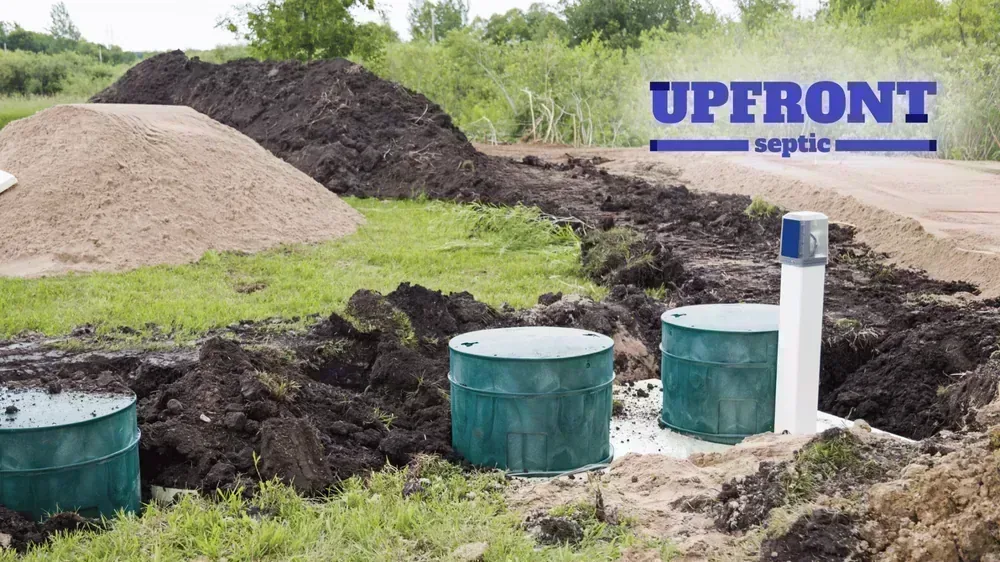
When you need Renton septic tank installation, the most important work happens before the tank ever goes into the ground. The property has to support the right system, the design must fit the home and site conditions, permits need to be approved, and the installation must be completed correctly. Upfront Septic & Plumbing helps homeowners move through that process with simple communication, transparent pricing, and trusted licensed contractor partners so you know what is happening and why.
What Should You Know Before Installing a Septic System in Renton?
A successful installation starts with the property, not with choosing a tank. Soil, available space, household needs, drainage, groundwater conditions, and local requirements all influence what type of system can actually work.
Here are the main things to expect:
Your property and proposed system location need to be evaluated.
The system must be designed around the site and expected wastewater use.
King County approvals are required before construction begins.
Tank and drainfield placement must allow safe, reliable operation.
Excavation and installation happen after the design and permits are ready.
Future maintenance and septic pumping access should be considered from the beginning.
Renton septic systems are regulated by Public Health – Seattle & King County rather than simply through the City of Renton. For a new onsite sewage system, King County requires a site application, approved design, and installation permit before construction can begin.
How Does Renton Septic Installation Work?
Renton septic tank installation normally moves through several stages. Rushing directly into excavation can create problems that are much more expensive to correct later.
Start With the Site and Existing Records
For an existing property, septic records and as-built drawings can provide useful information about previous systems, drainfield locations, and site limitations. King County maintains records that homeowners and septic professionals can search before planning major work.
For new construction, a qualified designer evaluates the property and develops a system appropriate for the site.
Match the System to the Property
Not every home needs the same septic tank or drainfield configuration. Household size, expected wastewater flow, soil absorption, available land, and site conditions all affect the final design.
A larger tank does not automatically mean a better system. The goal is a properly designed setup where the tank, treatment components, distribution system, and drainfield work together.
Before Installation
Why It Matters
Site and soil evaluation
Determines what system the property can support
Septic design
Matches capacity and layout to the home
Permit approval
Confirms the project meets King County requirements
Service access planning
Makes future inspection and tank pumping easier
Permits Come Before Excavation
This is one area where homeowners can underestimate the timeline.
A new system cannot simply be installed because there is enough room in the yard. King County states that construction cannot begin until the required installation permit has been issued and posted at the property. A certified installer then works with the system designer to complete the approved installation.
Installation, Connection, and Inspection
Once approvals are complete, the field work can begin. Depending on the approved design, the work may include excavation, tank placement, piping, distribution components, drainfield construction, system connections, testing, and final inspection.
Renton septic tank installation may involve significant excavation, so homeowners should also discuss access for equipment, landscaping impacts, existing utilities, and how the property will be restored afterward.
What Makes a Septic Installation Last?
Good installation is about more than getting wastewater out of the house. It should give the system the best chance to operate reliably and remain practical to maintain.
Plan for the Home You Actually Have
System sizing can be affected by household capacity and property use. Major remodels can matter too. King County notes that adding bedrooms or significantly changing a home may trigger additional septic review because occupancy is connected to required system capacity.
That makes accurate planning especially important if installation is part of new construction, a major renovation, or septic replacement.
Make Future Maintenance Easier
Once the system is underground, homeowners still need access for inspection, maintenance, and pumping septic waste from the tank when necessary.
A good installation plan considers access points and serviceability instead of treating maintenance as someone else’s problem years later. Regular inspections are also part of owning a septic system in King County, with inspection frequency depending on the type of system installed.
Straightforward Septic Service Without the Runaround
Upfront Septic & Plumbing was built around honesty, reasonable pricing, and customer satisfaction. The company helps connect homeowners with trusted licensed contractor partners and focuses on giving customers a simpler, more transparent service experience. Regulated septic work is completed by licensed contractors operating under the applicable licenses.
For Renton septic tank installation, that means understanding the scope before the work begins instead of being left guessing about the next step.
Upfront serves homeowners throughout King County, including Renton, East Renton Highlands, Fairwood, Kent, Newcastle, Maple Valley, Bellevue, and surrounding communities.
Contact Upfront Septic & Plumbing
Ready to talk through your Renton septic tank installation? Call Upfront Septic & Plumbing to discuss the property, the installation process, and what needs to happen next.
Upfront Septic connects homeowners with trusted contractor partners, including licensed companies such as Drain Beast Services.
Frequently Asked Questions About Septic Tank Installation in Renton
How much does septic tank installation cost in Renton?
There is no reliable one-price answer because cost depends on the system design, property conditions, excavation, tank size, drainfield requirements, permits, and other site-specific work.
Upfront focuses on giving homeowners a clear quote based on the actual project rather than pretending every installation is the same.
How long does a septic tank installation take?
The physical installation may take several days once permits and the approved design are ready, but the full project timeline can be longer.
Site evaluation, design work, permit review, weather, property access, and inspection scheduling can all affect completion time.
Do I need a permit for a new septic system in Renton?
Yes. A new onsite sewage system requires King County approval and an installation permit before construction begins.
Public Health – Seattle & King County oversees septic permitting for properties in Renton.
Can I replace only the septic tank instead of the whole system?
Sometimes, but it depends on the condition and compliance of the rest of the system.
The tank, drainfield, distribution components, and overall design should be evaluated before deciding whether a targeted repair or full replacement makes more sense.
Can a septic system be installed on any Renton property?
No. The property must be suitable for an approved onsite sewage system.
Soil conditions, available area, water sources, drainfield requirements, system design, and access to wastewater infrastructure can all affect what is permitted.
A Renton customer called us after another company reported the septic pump had failed. We arrived to a high-level alarm and a flooded system, found both baffles in good condition, and pumped approximately 1,300 gallons in total — 1,000 from the septic tank and 300 from the pump tank — to bring the flooding down and evaluate the system.
A 2,500-gallon grease trap at a Renton commercial property, pumped in full. The inspection also found a crack in the first compartment, an unsealed gap where the riser meets the tank, and a deteriorating section of sidewall.
A homeowner in Issaquah recently completed the installation of a brand-new septic system to provide a dependable, long-term wastewater solution for their property. The project began with a site evaluation and careful planning to ensure the new system met local regulations and was designed to perform efficiently for the home’s size and soil conditions. Once […]
King County Public Health inspected food businesses 71,580 times between January 2024 and September 2026, and closed 27 of them. For restaurant plumbing the real risk is not the citation - it is the backup that stops service, and the closure that follows.
What Is a Sump Pump Used For? A Practical Guide for Washington Homeowners What is a sump pump used for? It removes excess water collecting beneath or around the lowest part of a home before that water spreads across a basement floor or soaks a crawl space. In homes dealing with heavy rain, saturated soil, […]
Tacoma Grease Trap and FOG Compliance Laws: How Restaurant Owners Can Stay Compliant Running a restaurant in Tacoma means managing more than great food and customer service. Food service establishments must also comply with local Fats, Oils, and Grease (FOG) regulations designed to protect the city’s wastewater system. Failing to maintain your grease interceptor can […]
Can You Put Egg Shells in the Garbage Disposal? A clean kitchen is built on simple daily habits, but one common question continues to confuse homeowners: can you put eggshells in the garbage disposal? You may have heard that eggshells sharpen the disposal blades, while others insist they damage the system. With so much conflicting […]
How to Unclog a Garbage Disposal with Standing Water? When your kitchen sink fills instead of draining, it can feel like your entire day has come to a standstill. The good news is that many garbage disposal issues can be solved with a few simple techniques before you ever need professional help. A clogged garbage […]