
Seattle·Grease Trap Cleaning
Seattle Cafe Grease Trap Cleaning
An indoor grease trap at a Seattle cafe, pumped out and its inlet baffle removed and cleaned. The outlet-side baffle could not be removed, and a clog was found in the connected plumbing.
Drain field, leach field, absorption field: different names for the same component, and you will hear all of them. It is the part of the system that takes liquid effluent out of the septic tank and returns it to the soil, and it is where almost every expensive septic failure in Seattle ends up.
A drain field installation here is either part of a brand new system or, far more often, a replacement for a field that has stopped accepting water.
The honest answer for Seattle is that there often is no natural soil left to describe. We sampled 157 septic properties against the national soil survey and three quarters came back as urban land, which is the survey's way of saying the original ground has been cut, filled, paved or built over to the point where the natural profile no longer describes it.
Where a soil does survive it is mostly Alderwood, but that is the minority of properties here.
This matters more than it sounds. On natural ground, knowing the local soil tells you roughly how a drain field will behave before anyone digs. On made ground it tells you nothing, because what is under your lot depends on what was put there and when. A site evaluation is not a formality in Seattle. It is the only way to find out.
One caveat worth having up front: about half the addresses we sampled could not be matched to a map location, which is common with dense city addressing. Treat the figures above as indicative rather than precise.
Soil mapped from the USDA NRCS soil survey (SSURGO), sampled against 157 septic properties in Seattle.
Standing water, soft ground or unusually green growth over the field. Sewage odor outdoors, strongest after heavy household use or heavy rain. Slow drains throughout the house that clear for a while after a pump-out. An inspection report naming the dispersal component rather than the tank.
And the one that tells you most: backups that come back within weeks of pumping. If emptying the tank buys you a fortnight and the problem returns, the tank was never the issue. The field cannot accept what the tank is sending it.
Not every failing field needs replacing, and the cheaper answers are worth ruling out first. A failed pump or control float on a pressure system can look exactly like a dead field while the field itself is fine. So can a blocked or collapsed distribution box sending the whole flow to one lateral, root intrusion at a single line, or a downspout quietly watering the field.
What does need a new field: saturated soil across the whole footprint, a biomat that has sealed the trench bottoms, a field undersized for the house it serves, or one that has been driven on and compacted. An inspection tells you which. We would rather sell you a distribution box than a drain field when a distribution box is what it is.
A drain field replacement is permitted construction, handled by the health department rather than the building department. A designer or licensed on-site professional digs test pits and classifies the soil, which decides whether a conventional gravity field is allowed at all and how much area you need. The design is sized to the home's bedroom count and the measured soil loading rate, and sited to the required setbacks from wells, surface water, property lines and the building.
The application goes to Public Health, Seattle and King County with the design and the soil log. The work is inspected before it is backfilled, which is not a step anyone can skip, and the as-built drawing is filed at the end.
Soil is the single biggest factor, because it decides whether a conventional design is permittable at all. After that: how much usable area the lot has, whether an excavator can reach it, what the setbacks from wells and water allow, whether the tank is at the end of its life too, and the grading and seeding of the disturbed ground afterwards.
We quote after a site evaluation, not before. Anyone giving you a drain field price over the phone is guessing, because the thing that decides it is underground.
Our full guide covers field failure, repair against replacement, the permit sequence and costs in more depth, and a site evaluation is what turns any of it into a number for your own lot.
An indoor grease trap at a Seattle cafe, pumped out and its inlet baffle removed and cleaned. The outlet-side baffle could not be removed, and a clog was found in the connected plumbing.
Flooding in the elevator shafts brought us out to a Seattle healthcare center. Our crew ran approximately six hoses over 200 feet to reach the work area, then pumped and cleaned every elevator pit and catch basin.
When a portable restroom was overturned during a J. Cole concert at Lumen Field, sewage entered the field’s french drain system. Upfront Septic was called in to access the drainage system, remove the contaminated material, and restore the affected drain and catch basin.

Most residential septic pumping appointments take roughly 30 minutes to two hours, but the actual time depends on the tank size, how easy the tank is to reach, its condition, and how much has built up inside it.

Many Charmin products break down with water and suit a well-maintained septic system, but the product, the amount used and the condition of your tank all matter. What to look for, why flushable wipes are a different question, and when the paper is not the real problem.

King County Public Health inspected food businesses 71,580 times between January 2024 and September 2026, and closed 27 of them. For restaurant plumbing the real risk is not the citation - it is the backup that stops service, and the closure that follows.
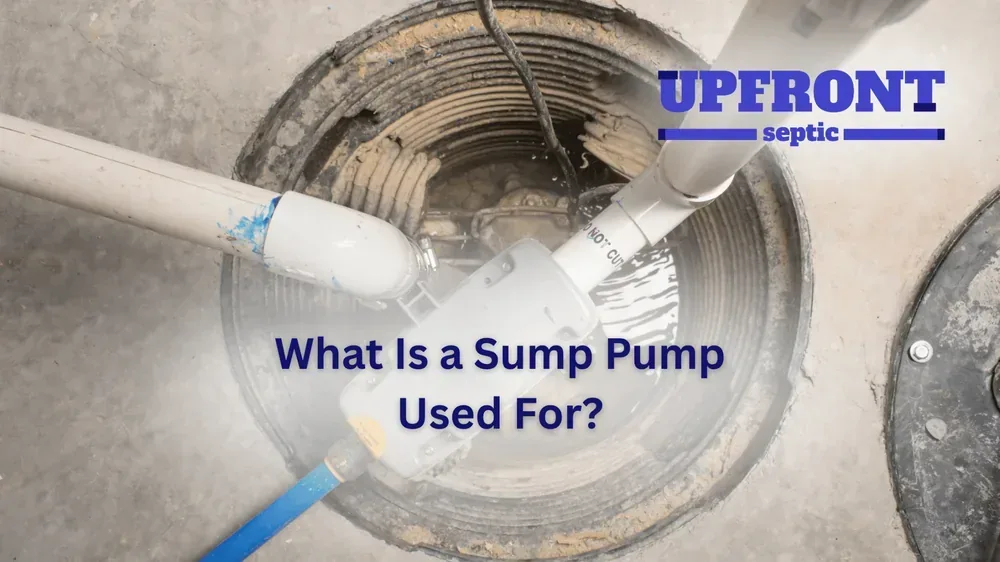
What Is a Sump Pump Used For? A Practical Guide for Washington Homeowners What is a sump pump used for? It removes excess water collecting beneath or around the lowest part of a home before that water spreads across a basement floor or soaks a crawl space. In homes dealing with heavy rain, saturated soil, […]

Tacoma Grease Trap and FOG Compliance Laws: How Restaurant Owners Can Stay Compliant Running a restaurant in Tacoma means managing more than great food and customer service. Food service establishments must also comply with local Fats, Oils, and Grease (FOG) regulations designed to protect the city’s wastewater system. Failing to maintain your grease interceptor can […]