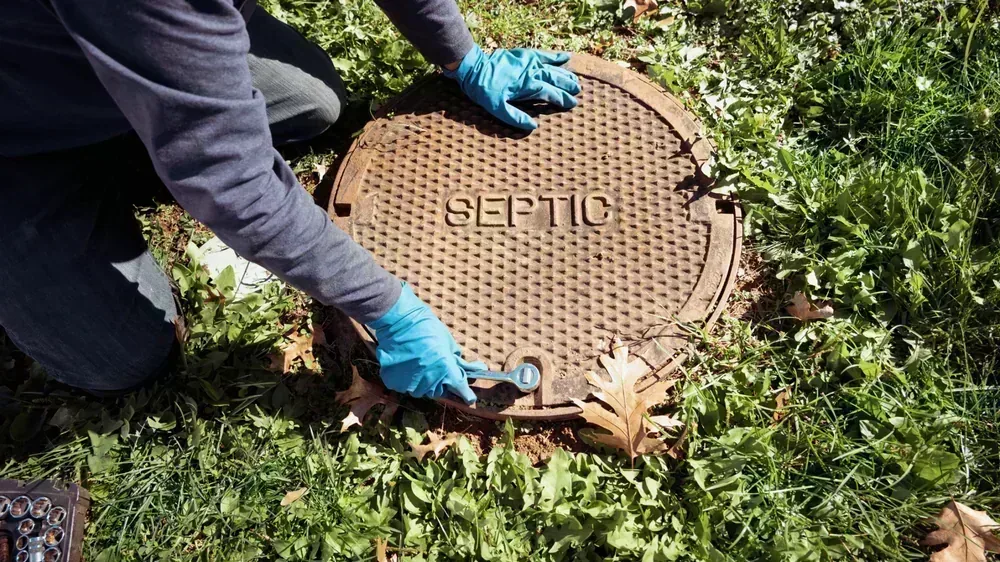
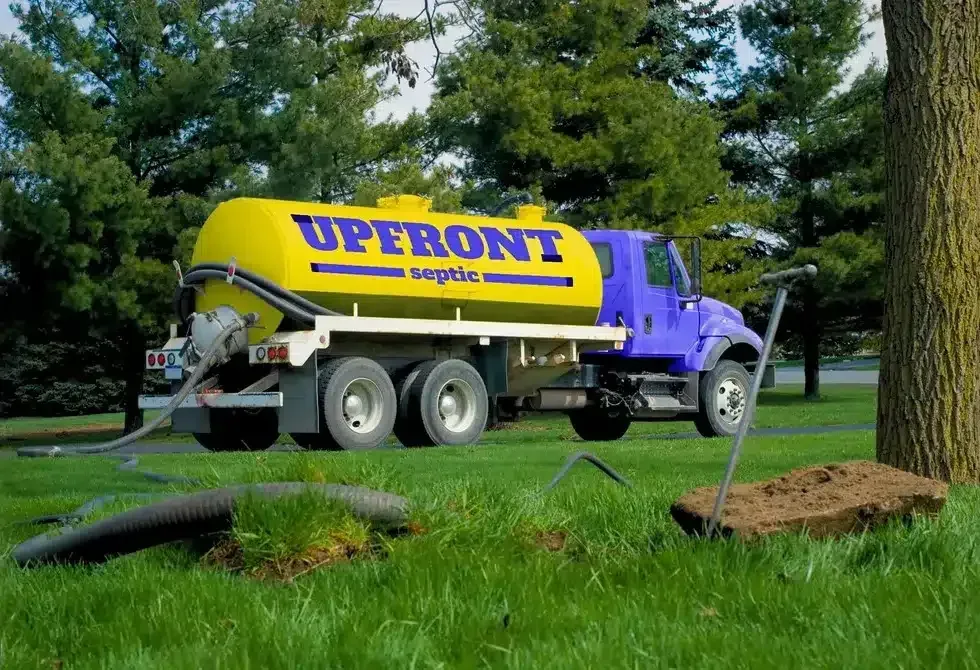
Getting a thorough septic inspection is essential—whether you’re a homeowner maintaining your septic system or preparing for a property's sale. At Upfront Septic, we deliver detailed septic inspections Auburn WA, clear pricing, and expert guidance tailored for homeowners in Auburn, WA.
The Importance of Septic Inspections in Auburn
A septic inspection uncovers hidden issues that, if ignored, could lead to costly repairs or replacements. By thoroughly examining the septic tank system, piping, and drain field, we identify problems like leaks, blockages, structural weaknesses, or failing components. Regular maintenance septic inspections Auburn WA preserve system efficiency and extend its usable life, ensuring you avoid unexpected breakdowns and protect your property value.
Permits, Documentation & Approval
In Auburn, a permit from King or Pierce County Public Health is required for new septic installation and most changes to existing septic system. A small inspection fee may also apply per phase. After the inspection, results are submitted electronically to public health.
Homeowners who schedule septic inspections Auburn WA can rely on our team to manage all permitting details and handle the documentation process accurately.
Inspection Scope & What We Check
Upfront Septic follows best practices and county standards to perform a complete septic inspection, including:
Permits and Records
Our team performing septic inspections Auburn WA conducts each step with precision, helping homeowners meet all local and state standards.
Pre-visit coordination
We gather details about your septic system, maintenance history, and permitting.
On-site arrival
Prompt arrival by our licensed septic experts.
Surface inspection
We expose risers and conduct preliminary checks.
Component-specific assessment
Includes internal tank inspection, pump testing, piping, and alarm checks.
Optional Add-ons
Services like dye testing, riser locating, or septic pumping if needed.
Report submission
We submit your inspection report to the county.
Results & Recommendations
A detailed explanation of system health, with photos and next steps.
Septic inspections Auburn WA performed by our certified team follow this thorough process every time, ensuring you get actionable insights and full transparency.
Contact Upfront Septic
For trusted, professional septic inspections, contact Upfront Septic today:
Phone: (253) 364‑7416
For reliable septic inspections Auburn WA, septic pumping, or complete septic services, trust the team at Upfront Septic.
Septic inspections in Auburn, by the records
Every septic inspection in King County is filed with the health department, so what follows is what inspectors actually recorded in Auburn rather than a rule of thumb.
| Measure | Figure | What it covers |
|---|
| Inspections filed in Auburn, 2015–2025 | 6,960 | Every inspection is filed with the health department |
|---|
| Inspections that found a problem | 26.7% | 3.3 points above the King County average |
|---|
| Carried out at the point of sale | 3,857 | Of which 25.7% found a problem |
|---|
| Partial rather than full inspections | 24.4% | Region-wide, partial inspections find a problem more often |
|---|
| Past due for an inspection | 52.5% | Of the 3,790 whose system type is on record |
|---|
| Past twice their interval | 27.9% | A subset of the row above |
|---|
| Properties on septic in Auburn | 5,841 | System type recorded for 3,790 of them (65%) |
|---|
Of the inspections filed in Auburn over the decade to 2025, 26.7% recorded a deficiency — 3.3 points above the King County average. A deficiency is an inspection filed with a status of Deficient, and the records carry no severity field, so it covers everything from a missing riser lid to a failed drain field. It is not the same thing as a broken system.
Roughly 55% of the inspections here happened because a property was changing hands, and 25.7% of those found something. Washington requires an inspection at sale whatever the system type, so that group is a complete count of a defined event rather than a sample.
How often you are due depends on what kind of system you have, so this can only be measured where the type is on record. In Auburn that is 3,790 of the 5,841 septic properties — 65%. Of those, 52.5% have no inspection filed within their interval and 27.9% are past twice it. The rest cannot be assessed either way, and nothing here should be read as a finding about them.
If you do not know where your own system stands, we can tell you: there is more on what an inspection covers, who is allowed to carry one out and what the records show region-wide on our septic inspections page.
What the rules require in Auburn
On-site sewage in King County is governed by Board of Health Title 13, adopted in February 2025 and in effect since 1 April 2025. Inspection frequency comes from Table 13.60-1: a gravity system without a pump is monitored every three years; public-domain technology — mounds, intermittent sand filters and pressure distribution — and proprietary treatment units are monitored every year. A newly installed system gets its first inspection six months after occupancy, or 45 days for a proprietary or commercial system.
King County is unusual in who may do the work. On a gravity system without a pump the owner may perform the routine monitoring themselves, as may a licensed maintainer or a licensed OSS pumper. Anything with a pump, and anything in a marine recovery area, requires a licensed maintainer. The report goes to you at the time of the inspection and to the health officer within thirty days.
Solids have their own separate rule: the owner must determine the level of solids and scum at least every three years for a residential system with no garbage grinder, and every year if a garbage grinder is installed.
Selling a home in Auburn triggers its own inspection. Before title transfers the seller must have a property transfer monitoring and performance inspection carried out by a licensed OSM, unless one was performed in the previous twelve months and the property has not changed hands since. The owner must also give the buyer the maintenance records if they have them.
Sources: King County Board of Health Title 13, Sections 13.60.005, 13.60.020 and 13.60.030, and Table 13.60-1. Revised OSS codes · Records search